

School Summer Maintenance: Have You Got Everything Covered?
Most schools go into summer with a maintenance list. Fewer come out the other side with it finished.
Summer is the only window in the school calendar where buildings are genuinely accessible. No pupils, no live kitchen service, no lessons to work around. For an estates manager or site manager, it is the best six to eight weeks of the year to get things done. Miss it, or arrive at September with half the programme incomplete, and those jobs either wait until Christmas or become reactive repairs mid-term — which is always more disruptive and always more expensive.
If your school’s summer programme still has gaps, or you’re looking at the list and realising the contractor cover you needed is not quite there, this is a practical guide to what still needs addressing before September, and how to plan the next cycle so it does not happen again.
Why the Summer Window Is the Only Realistic One
Schools are not like other commercial buildings. You cannot book a kitchen deep clean on a Tuesday in November and expect the catering team to accommodate it. You cannot arrange access to classrooms while 30 children are sitting in them. You cannot get a roofing crew onto a building while a lesson is running below. Working schools close off most maintenance options that are routine in an office or a warehouse.
Summer changes that. Six weeks of full site access, a kitchen that can be taken offline properly, corridors that can be stripped and deep-cleaned without anyone walking through them two hours later. For school building maintenance, this is the window that matters most.
The scale of deferred maintenance across the English school estate makes that window more important year on year. The National Audit Office identified a £13.8 billion maintenance backlog across English schools as of October 2024, and civil servants confirmed the true figure is almost certainly higher. Individual schools cannot fix a systemic funding problem, but an estates manager who uses the summer window fully keeps small issues from becoming part of it.

What a Complete School Summer Maintenance Programme Covers
Many summer programmes cover the obvious jobs and skip the ones that actually drive compliance and longevity. Here is what a thorough programme addresses, across both cleaning and building.
Classroom and corridor deep cleans
Standard term-time cleaning keeps surfaces presentable. It does not reach the accumulated grime in corners, under furniture, on high-level ledges, or in carpeted areas that have been through two terms of heavy traffic. A proper classroom deep clean strips everything back: floors, walls, fixtures, soft furnishings, IT equipment surrounds. It takes time and it requires rooms to be genuinely empty, which is why it belongs in summer and not a half-term week.
Corridors and stairwells take more punishment than any other part of a school building. Floor surfaces worn down by a year of foot traffic, marks on walls from bags and coats, grilles and vents collecting debris through every term. Summer is the time to reset these properly.
Kitchen extraction and canopy cleaning
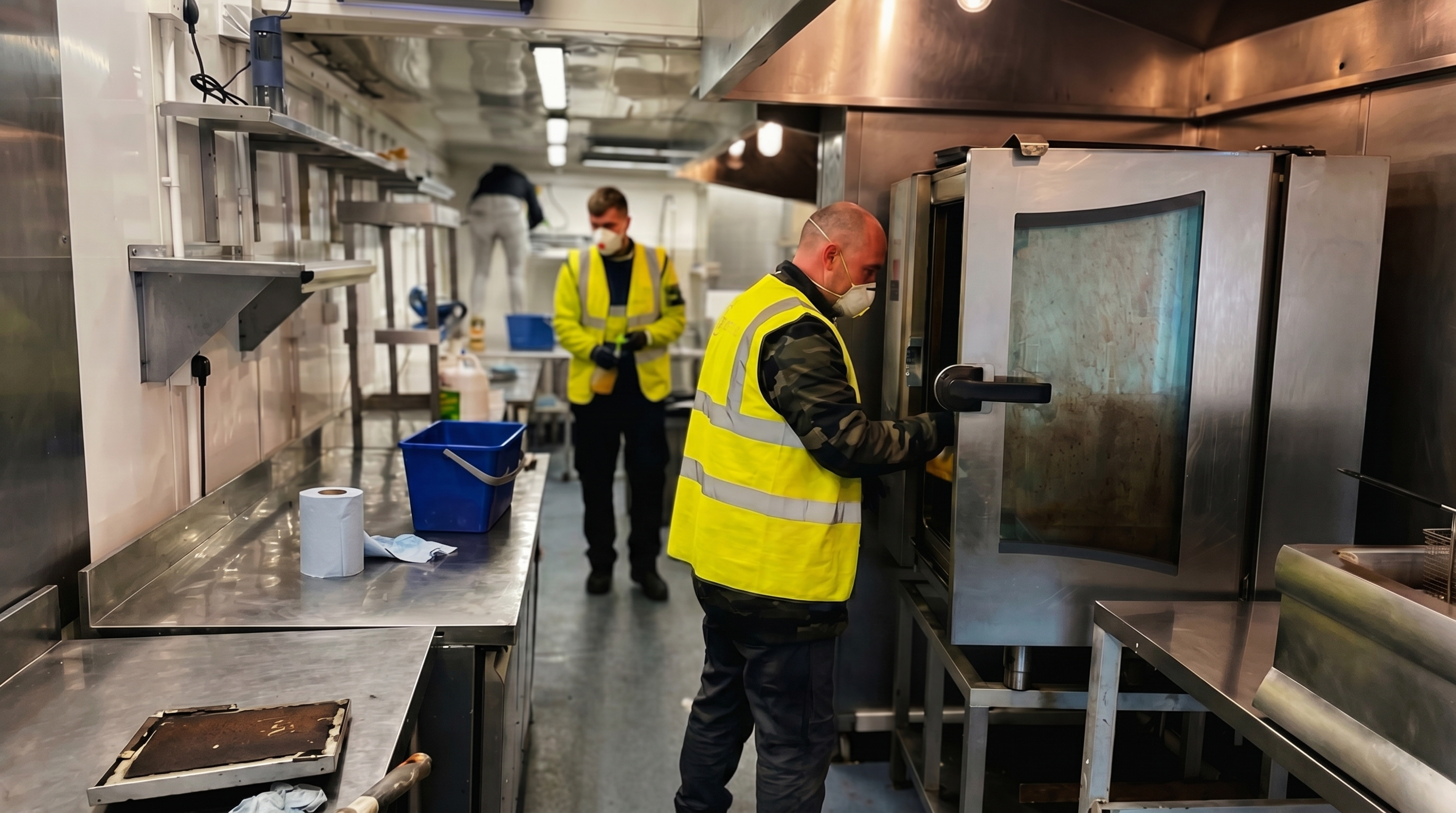
School kitchens operate under the same legal framework as commercial catering operations. The Food Safety Act 1990, enforced by local Environmental Health Officers, requires kitchens to maintain documented cleaning schedules and comply with food hygiene standards at inspection. Extraction systems and canopies are a specific compliance risk: grease accumulation in ductwork is both a hygiene concern and a fire hazard, and it is one of the areas inspectors focus on most closely.
Summer is the natural point for extraction cleaning. The catering operation is offline. Access to the canopy and ductwork is unrestricted. The work can be done properly without time pressure. SSH Cleaning carries out kitchen extraction and canopy cleans for education sites across the summer window, including full documentation for compliance records.
Gutter clearing and exterior works
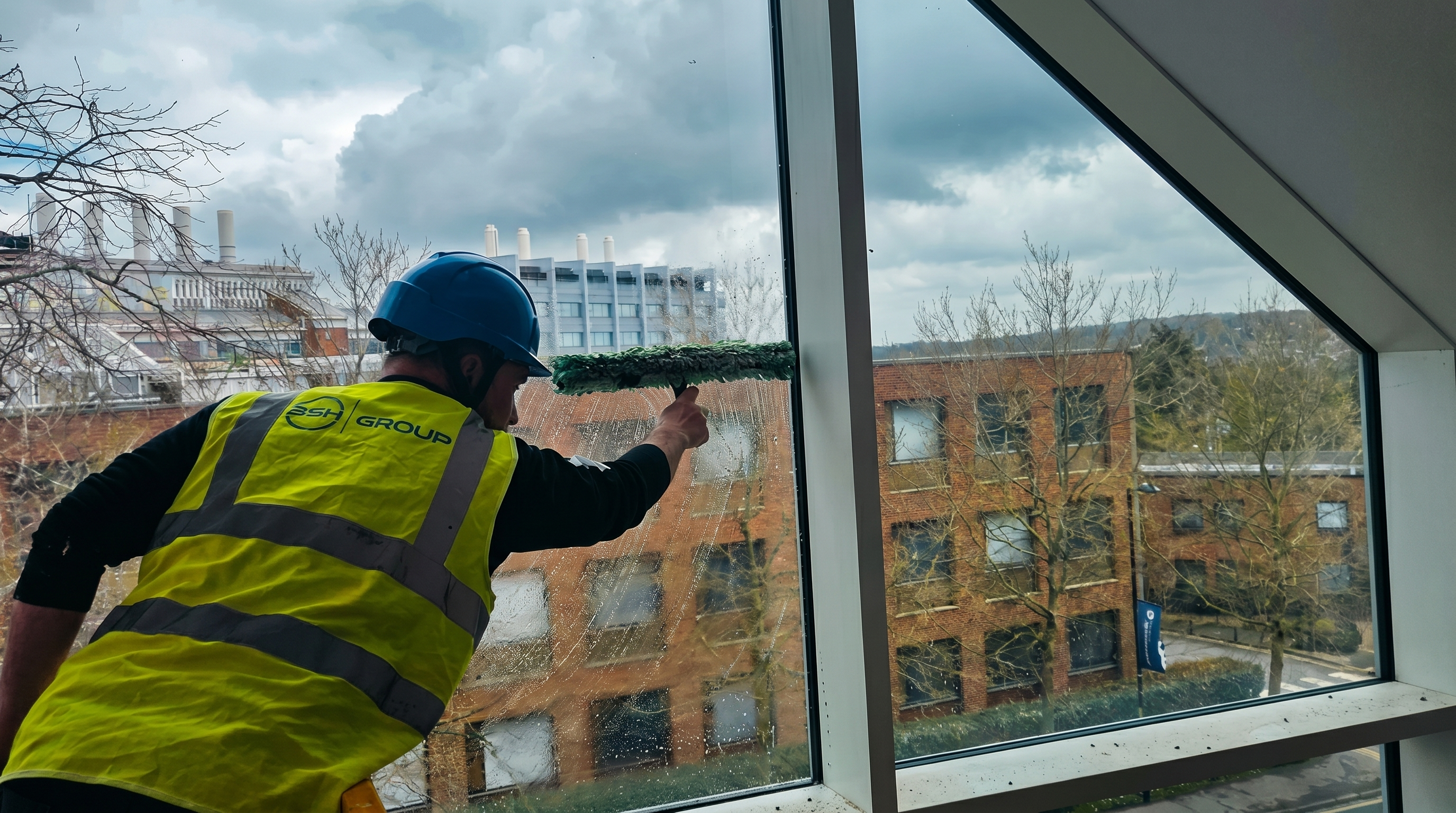
External jobs need dry conditions and accessible platform equipment. Summer provides both. Gutters that have been collecting debris since autumn need clearing before the first heavy rain in September blocks the downpipes. Cladding that has picked up a year of atmospheric grime and biological growth can be cleaned properly while the site is quiet. High-level window cleaning on multi-storey blocks can be carried out without access equipment parked next to a live teaching building.
These are jobs that tend to get deprioritised because they feel cosmetic. They are not. Blocked gutters cause water ingress. Dirty cladding traps moisture against the surface material. External glazing with failed seals allows water into the building fabric. Catching all of these in July costs far less than addressing the consequences in January.
Building maintenance and remedial works
Roofing repairs, plumbing works, fencing, M&E checks, fire door inspections. Any building fabric work that requires contractors on site with tools and access equipment belongs in summer. SSH Building handles planned and reactive maintenance for education sites, and the two-arm model matters here: cleaning and building maintenance coordinated under the same programme means one mobilisation, one set of access logistics, one point of contact rather than separate contractors arriving on separate days.
If Your School Summer Maintenance Programme Has Gaps, Act Now
July is not too late. If there are jobs on your list that still need a contractor, or areas your current programme does not cover, there is time to get them booked. August availability shrinks quickly once schools that left things late all try to fill the same gaps at once, so the sooner you confirm what you need, the better.
Common gaps that emerge at this point in the summer:
- Kitchen extraction not yet booked, or the last clean predates this academic year
- External works such as gutters and cladding carried over from the original programme
- Classroom deep cleans compressed into corridor cleans when time ran short
- Building maintenance jobs flagged in spring that are still waiting for a contractor
- Post-construction builders cleans from any refurbishment work done over the holiday
If any of those look familiar, get in touch with The SSH Group. We work across cleaning and building maintenance from the same office, so one conversation covers the full scope. What can still be done before September is a practical discussion, and we will tell you straight what is and is not achievable in the time.
Planning the Next Cycle: Autumn Is When It Starts
The estates managers who go into summer with a complete, fully confirmed programme are the ones who started planning in the previous autumn. Some academy trusts confirm their summer contractors in October. Schools that wait until April find the best contractors already committed, and are working with whoever has availability left.
September and October are the right months to start that conversation for the next school summer maintenance cycle. Not just summer, but Christmas and Easter too. A school that maps out its maintenance needs across all three holiday windows in autumn goes into the year with a clear programme, confirmed contractor cover, and a budget figure that has time to go through proper approval. One that starts in March is always rushed and usually pays more for it.
What to map out in autumn planning
A useful autumn planning conversation with a contractor covers:
- What came out of this summer’s programme, anything incomplete or flagged for follow-up
- Christmas window scope: typically one to two weeks, enough for kitchen cleans, targeted deep cleans, and minor building works
- Easter window scope: two weeks, external works if weather allows, classroom resets before the final term
- Next summer scope: the full school summer maintenance programme, built around what this year missed or ran short on time to complete
Planning across the full year means work can be distributed sensibly. A kitchen extraction clean can sit at Christmas if summer is already tight. Corridor repainting can move to Easter if the budget works better then. The more lead time a contractor has, the more the programme can flex around what actually suits your school.

One Contractor. Everything Covered.
The biggest source of friction in school summer maintenance programmes is managing multiple contractors. One for cleaning, one for building works, one for specialist jobs like extraction or roofing, all requiring separate bookings, separate access arrangements, and separate invoices. For an estates manager looking after a multi-site academy trust, this adds up fast every holiday period.
The SSH Group operates across cleaning and building maintenance from the same office. SSH Cleaning and SSH Building work together on the same sites, so one conversation covers the full scope of what your school needs. For academy trusts managing several buildings, a programme can be batched across all sites, with SSH coordinating the schedule rather than the estates team managing it.
If you have gaps in this summer’s programme or want to get ahead of the next cycle, get in touch and tell us what you need. We will give you a straight answer on what is achievable.