
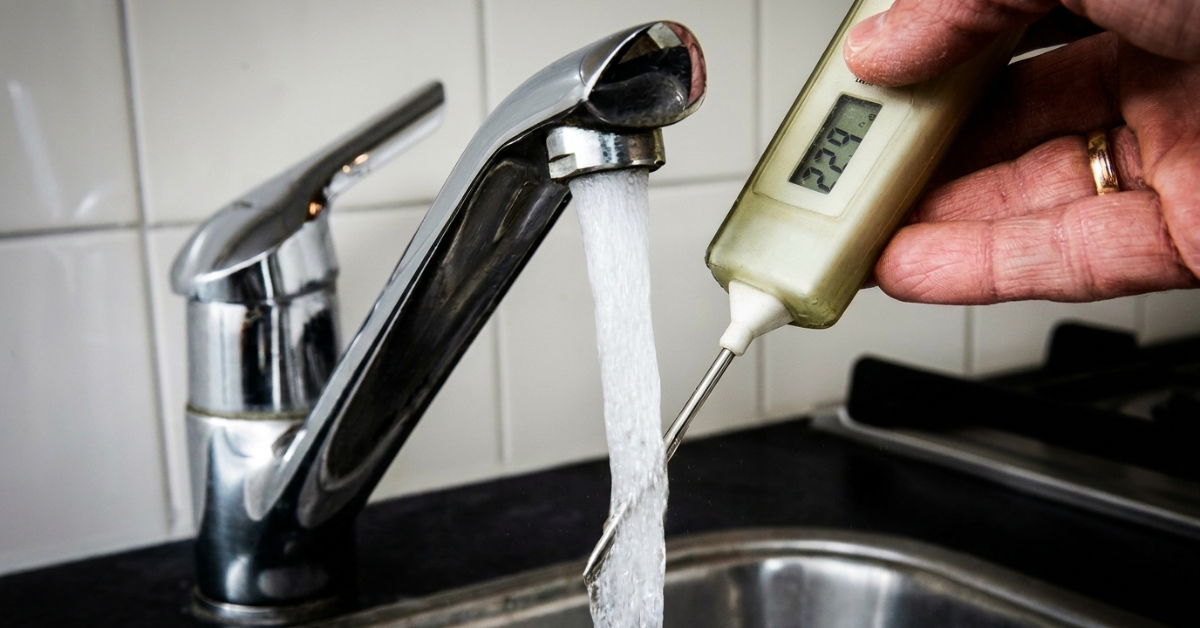
Earlier this year, the UK Health Security Agency launched an investigation into an unusual cluster of Legionnaires’ disease cases in north-west and south-west London. By late March 2026, eight confirmed cases had been identified sharing the same bacterial sequence type, with a further thirteen under investigation. The source was never publicly confirmed. That is how Legionella outbreaks often go.
What the outbreak did do was put water safety back on the agenda for facilities managers, estates teams, and building operators across the country. The timing matters for a specific reason: we are now heading into summer, and summer is when Legionella risk in buildings reaches its highest point. Schools close for six weeks. Office buildings run at reduced capacity. Care home annexes go into intermittent use. Water sits still in systems that were running normally the week before.
This is not a theoretical risk. It is a documented one, and it comes with legal duties that do not pause for the holidays.
Why Buildings Standing Empty Increase the Legionella Risk in Buildings
Legionella bacteria are present in most water systems at low, manageable levels. The conditions that turn a background presence into a serious risk are well documented: water temperatures between 20 and 45 degrees Celsius, stagnation, and the presence of nutrients like rust, scale, or biofilm. Regular building use naturally disrupts two of those three conditions. Taps are run daily. Hot water systems cycle. Cold water turns over before it has a chance to warm up.
When a building empties, all of that changes. Water sits in pipework. Cold supplies that were previously turning over daily can reach ambient temperatures within days in summer. Hot water systems that are not being drawn off can cool into the growth range. Showerheads that were used every day become exactly the kind of low-use outlet the HSE guidance on Legionella control specifically identifies as high-risk.
Schools are the clearest example. A secondary school with 1,200 pupils has water outlets in use across its entire estate every day during term. The day it closes for summer, every one of those outlets becomes infrequently used, and a six-week holiday is a long time in a warm building with static water. But schools are not alone in this. The same logic applies to any building that sees reduced occupancy over the summer period: office blocks, healthcare facilities, commercial premises, and care homes where certain areas have lower usage during staff holiday rotations.
What Duty Holders Are Required to Do
The legal framework is clear and has been in place for years. Under the Health and Safety at Work Act 1974 and the Control of Substances Hazardous to Health Regulations 2002, anyone responsible for a building with a water system has a duty to assess and manage Legionella risk in buildings. That duty does not transfer to a tenant or a caretaker. It sits with the duty holder, whether that is a school business manager, an academy trust head of estates, a care home group facilities manager, or a commercial FM.
The HSE sets out what that means in practice. A current, documented risk assessment. A written water management scheme based on it. Regular monitoring, including temperature checks at sentinel outlets. A flushing programme for all outlets, particularly low-use ones. TMV servicing. Records kept and retrievable.
Records are not just good practice. They are the evidence that shows a building was managed properly if something goes wrong. A housing association was fined close to a million pounds following a Legionella outbreak after investigators found that documented controls had not been carried out. Having a risk assessment in a filing cabinet is not the same as implementing what it says.
The Gap in Managing Legionella Risk in Buildings: Testing Without Remedials
Most building operators are aware that Legionella risk assessments exist. Fewer have the full picture of what happens when a risk assessment identifies a problem.
A risk assessment tells you the risk. It does not fix it. Where an assessment identifies elevated temperatures, dead legs in pipework, scale buildup, or a system that has not been flushed to the required standard, remedial works are needed. Those remedial works are a separate scope. They require a contractor who can actually carry out the work, not just the assessor who identified it.
The organisation that carries out the risk assessment recommends a course of action. The building operator then has to find a separate contractor to carry it out, go through procurement again, and wait for availability. In the meantime, the identified risk sits unaddressed. For a school trying to get everything sorted before September, or a care home with a CQC visit on the horizon, that gap between assessment and remediation is a real operational problem.
The SSH Group approaches this differently. SSH Building carries out Legionella risk assessments and the remedial works that follow from them, under the same contractor relationship. One assessment, one team, one programme of works. If the assessment finds dead legs that need removing, scale that needs treating, or a system that needs flushing and documenting, that work goes straight into the remedials programme. No second procurement process, no gap between finding the problem and addressing it.
What Buildings Need Before They Reopen
For any building that has been closed or running at reduced occupancy this summer, the period before reopening is the critical window for Legionella risk in buildings. Water that has been sitting in systems for six weeks carries a higher risk than water in a building that has been running normally. Getting the system back to a safe state before staff, pupils, residents, or visitors return is a duty, and the window to do it is narrower than it looks.
The practical checklist for duty holders at this point covers:
- Pre-return flushing of all outlets, including low-use taps, showers, and drinking fountains, with temperatures recorded at each one
- Temperature verification across sentinel outlets to confirm hot water is above 50 degrees Celsius at the outlet and cold water is below 20 degrees
- Showerhead descaling and disinfection, particularly in sports facilities, changing rooms, and staffed residential settings
- TMV servicing if not completed during the academic or financial year
- Review of the written water management scheme to confirm all controls were implemented during the closure period and records are complete
- Risk assessment update if any works were carried out over summer that changed the water system configuration
For schools in particular, the pre-September window is tight. The week before staff return is not enough time to identify a problem, source a contractor, and carry out remedial works. The buildings that go into September without incident are the ones where this work was planned and confirmed in July, not the ones where someone checked the checklist on the last day of August.
Planning Legionella Risk in Buildings as Part of the Summer Programme
Legionella risk management works best when it sits inside a planned maintenance programme rather than sitting outside it as a separate task. Holiday windows, whether that is summer, Christmas, or Easter, are the most practical points to carry out water system checks, because the building is empty, access is unrestricted, and any remedial works can be completed without disruption. But the planning for those windows needs to happen well before them, not during. A building doing a full summer reset, external cleaning, building works, deep cleans, sits in the right operational state for water system checks to be carried out properly. The site is accessible, the building is empty, and contractors can move around without disrupting anyone.
For facilities managers overseeing multiple buildings, coordinating a programme across all sites makes far more sense than doing each one reactively in September. Running Legionella assessments and remedials across several sites on a rolling schedule through July and August, rather than site by site in September, is how organisations stay ahead of the compliance curve rather than reacting to it.
The SSH Group works across building maintenance and specialist cleaning for education sites, healthcare facilities, and commercial premises from the same office. SSH Building handles Legionella risk assessments and the remedial works that come from them, alongside planned property maintenance across the summer window. SSH Cleaning covers the building reset that runs in parallel. One conversation with The SSH Group covers the full scope, and the documentation from every job feeds into the compliance records that duty holders need to demonstrate control.
For facilities managers overseeing multiple buildings, the organisations that stay on top of Legionella risk in buildings are the ones that plan assessments and remedials on a rolling schedule across the year, not the ones that respond to problems after they surface. Autumn is a natural point to map out the next twelve months and confirm which buildings need attention at each holiday window.